Cross Border Tax and Accounting

Cross Border Tax and Accounting: What to Expect During a Foreign Tax Credit CRA Audit 

Cross-border income offers incredible opportunities, but it also creates additional tax reporting responsibilities. 

If you earn income in both Canada and the United States, claiming a Foreign Tax Credit (FTC) can help prevent double taxation. 

However, the Canada Revenue Agency (CRA) carefully reviews these claims, especially during an audit.

Kapil Mahajan CPA Professional Corporation helps individuals, business owners, investors, and professionals navigate complex Canada-U.S. tax matters with confidence. 

Whether you’re earning employment income, investment income, or business profits across the border, understanding how a CRA Foreign Tax Credit audit works can help you prepare before questions arise.

In this guide, we’ll explain what the CRA examines, the documents you’ll need, common mistakes that trigger adjustments, and how professional cross border tax and accounting support can make the audit process significantly smoother.

Key Takeaways

  • Understand why the CRA reviews Foreign Tax Credit claims carefully.
  • Learn which documents auditors commonly request.
  • Know how Canada-U.S. tax treaties affect your claim.
  • Discover common mistakes that lead to denied credits.
  • See how proactive tax planning reduces audit risk.
  • Learn when working with experienced professionals becomes essential.

Why Foreign Tax Credit Audits Are Becoming More Common

As international employment, remote work, investments, and business ownership continue to grow, the CRA has increased its focus on cross-border tax compliance.

A Foreign Tax Credit allows Canadian taxpayers to claim a credit for eligible taxes paid to another country, reducing the risk of being taxed twice on the same income. However, every claim must be fully supported by documentation and comply with Canadian tax law and the applicable tax treaty.

This is where accurate cross border tax and accounting becomes essential. Proper documentation, treaty interpretation, and accurate calculations can significantly reduce audit challenges.

Decision Flow: Is Your FTC Likely to Face Questions?

Foreign income earned?

        │

Foreign taxes paid?

        │

Proper proof of payment available?

        │

Income sourced correctly?

        │

Treaty limits correctly applied?

        │

Accurate currency conversion?

        │

Lower CRA audit risk

What Does the CRA Review During a Foreign Tax Credit Audit?

A CRA auditor is not simply checking whether foreign tax was paid.

Instead, they verify whether:

  • The foreign tax was legally payable.
  • The payment qualifies under Canadian tax law.
  • The claimed amount follows Canada-U.S. treaty rules.
  • The income was sourced correctly.
  • Currency conversions were accurate.
  • No excess credit has been claimed.

Strong cross border tax and accounting ensures every step of this process is properly documented before an audit begins.

Documents You Should Expect the CRA to Request

One of the biggest reasons FTC claims are adjusted is incomplete documentation.

During the audit, expect requests for the following.

1. Proof of Foreign Tax Payment

The CRA wants evidence that the foreign tax was actually paid.

Examples include:

  • Official tax assessments
  • Government-issued payment confirmations
  • Tax authority receipts

Screenshots or unofficial summaries may not always be sufficient.

2. Foreign Income Tax Returns

Auditors frequently compare:

  • Canadian tax returns
  • U.S. federal returns
  • State returns (where applicable)
  • Other foreign returns

This helps verify that reported foreign income matches the FTC claim.

3. Withholding Statements

Common examples include:

  • U.S. Form 1042-S
  • W-2
  • 1099
  • Investment withholding statements

These documents confirm taxes withheld before income was received.

Reduce CRA Audit Risk Before It Starts

Cross-border tax issues are much easier to resolve before the CRA asks questions.

Book a consultation with Kapil Mahajan CPA Professional Corporation to review your Foreign Tax Credit claims, identify documentation gaps, and build a stronger Canada-U.S. tax strategy.

Currency Conversion Is Often Overlooked

One surprisingly common audit issue involves exchange rates.

The CRA generally expects taxpayers to use appropriate Bank of Canada exchange rates based on:

  • Date income was earned
  • Date foreign tax was paid
  • Applicable CRA guidance

Using inconsistent exchange rates may alter the FTC calculation.

Professional cross border CPA services can help ensure calculations remain consistent throughout your filings.

Tax Treaty Verification Is Vital

Canada maintains tax treaties with many countries, including the United States.

The Canada-U.S. Tax Treaty limits withholding taxes for many types of income, including:

  • Dividends
  • Interest
  • Royalties
  • Certain pension income

If foreign tax exceeds treaty limits, the CRA may classify the excess as a voluntary payment rather than an eligible Foreign Tax Credit.

That means the excess amount could be denied entirely.

Experienced cross border tax accountants carefully review treaty provisions before filing FTC claims to avoid these costly adjustments.

Income Sourcing Is Critical

Many taxpayers assume income belongs to the country where payment originated.

In reality, the CRA often examines:

  • Where work was physically performed
  • Employment location
  • Business operations
  • Permanent establishment issues
  • Residency status

For remote employees who work between Canada and the U.S., this analysis becomes particularly important.

Accurate cross border tax and accounting helps establish the correct sourcing of income and supports the documentation auditors typically request.

Common Reasons Foreign Tax Credit Claims Are Adjusted

Several recurring issues appear during CRA audits.

Missing proof of payment

Tax was claimed but official payment evidence cannot be produced.

Incorrect treaty calculations

The taxpayer claimed more foreign tax than permitted under treaty rules.

Inconsistent reporting

Foreign income reported on U.S. returns does not match Canadian reporting.

Currency conversion errors

Improper exchange rates changed the FTC calculation.

Incorrect income sourcing

The taxpayer incorrectly determined where income was earned.

Incomplete records

Supporting documentation is unavailable years later.

Most of these issues can be avoided through proactive cross border tax and accounting planning.

Canada-U.S. Cross-Border Tax Challenges

Canada-U.S. taxation is among the most complex international tax relationships.

Taxpayers may have:

  • Dual filing obligations
  • Employment income in both countries
  • Cross-border investments
  • Rental properties
  • RRSP and IRA considerations
  • Capital gains
  • Self-employment income
  • Corporate ownership

Each situation affects Foreign Tax Credit calculations differently.

An experienced cross border CPA understands how both tax systems interact and can identify issues before they become audit concerns.

Audit Preparation Checklist

Before claiming your Foreign Tax Credit, verify that you have:

ChecklistReady?
Foreign tax returnsYes
Official tax payment receiptsYes
Withholding slipsYes
Currency conversion recordsYes
Canada-U.S. treaty reviewYes
Income sourcing documentationYes
Employment or business recordsYes
Supporting calculationsYes

Real-World Example

Imagine a Canadian resident who works remotely for a U.S. company while spending time in both countries.

They receive:

  • U.S. salary
  • U.S. withholding
  • Canadian residency obligations

During an audit, the CRA may ask:

  • Where was the work physically performed?
  • Were treaty provisions correctly applied?
  • Was the foreign tax legally payable?
  • Was the exchange rate accurate?
  • Does the FTC exceed treaty limits?

Without organized records, even legitimate claims can become difficult to defend.

This is why many taxpayers work with cross border tax accountants before filing rather than after receiving an audit notice.

How Professional Guidance Can Help

Cross-border tax audits often involve far more than completing forms.

Professional advisors help with:

  • Canada-U.S. residency analysis
  • Foreign Tax Credit calculations
  • Treaty interpretation
  • Income sourcing
  • Currency conversion reviews
  • CRA correspondence
  • Audit representation
  • Long-term tax planning

Working with an experienced cross border CPA also helps identify planning opportunities that reduce future compliance risks.

Conclusion

Foreign Tax Credit audits can feel overwhelming, but they are far easier to manage when your documentation, calculations, and treaty analysis are prepared correctly from the beginning.

Whether you earn employment income, investment income, or business income across Canada and the United States, maintaining accurate records and following CRA requirements can significantly improve the outcome of an audit.

Kapil Mahajan CPA Professional Corporation provides personalized Canada-U.S. tax guidance designed to help individuals and businesses navigate complex reporting obligations with greater confidence. 

From Foreign Tax Credit planning to audit support and long-term compliance, experienced advice can make all the difference.

Need Help With Canada-U.S. Cross-Border Taxes?

If you’re claiming Foreign Tax Credits, managing dual tax obligations, or preparing for a CRA review, connect with Kapil Mahajan CPA Professional Corporation

Professional guidance today can help protect your tax position, strengthen your documentation, and give you confidence throughout the audit process.

FAQs

1. What triggers a Foreign Tax Credit audit in Canada?

Large FTC claims, inconsistent reporting between Canadian and foreign tax returns, missing documentation, unusual income sourcing, or treaty-related issues may increase the likelihood of a CRA review.

2. How many times should I keep supporting documents for a Foreign Tax Credit claim?

The CRA generally expects taxpayers to retain supporting tax records for several years. Keeping complete documentation for as long as legally required is recommended, especially for Canada-U.S. tax matters.

3. Can the CRA deny part of my Foreign Tax Credit?

Yes. If foreign taxes paid exceed the withholding limits established under the applicable tax treaty, the CRA may deny the excess amount because it may be considered a voluntary payment.

4. Why is income sourcing important during a Canada-U.S. tax audit?

Income sourcing determines which country has taxing rights and directly affects Foreign Tax Credit eligibility. Incorrect sourcing may lead to denied credits or additional tax assessments.

5. When should I hire a cross-border tax professional?

If you earn income in both Canada and the United States, own foreign investments, operate a cross-border business, or anticipate a CRA review, seeking professional cross border tax and accounting guidance early can help minimize compliance risks and improve reporting accuracy.

Read More
cross border tax and accounting

Canada Departure Tax Explained: A Cross Border Tax and Accounting Guide 

Planning to move from Canada to the United States or another country involves much more than changing your address. 

One of the most important tax considerations is Canada’s departure tax, often referred to as the “exit tax.” 

Understanding how this tax works can help you avoid unexpected liabilities and ensure a smoother transition.

Whether you’re relocating for work, retirement, or family, Kapil Mahajan CPA Professional Corporation provides professional cross border tax and accounting services to help individuals navigate complex Canada–U.S. tax obligations. 

Here’s what you need to know before becoming a non-resident of Canada.

Key Takeaways

  • Canada’s departure tax applies when you cease to be a Canadian tax resident.
  • The CRA treats many of your assets as if they were sold at their fair market value on your departure date.
  • Certain assets, including RRSPs, RRIFs, TFSAs, and Canadian real estate, are generally exempt.
  • Payment of departure tax may be deferred under specific conditions.
  • Professional planning helps minimize errors and ensures compliance with CRA requirements.

What Is Canada’s Departure Tax?

Canada’s departure tax, commonly called the “exit tax,” applies when you become a non-resident for Canadian tax purposes. 

Although you may not physically sell your investments, the Canada Revenue Agency (CRA) assumes that you disposed of many of your worldwide assets at their fair market value immediately before leaving Canada.

This process is known as a deemed disposition. If those assets have increased in value while you were a Canadian resident, you may owe capital gains tax on the unrealized appreciation.

For individuals with investments, shares, or international assets, proper cross border tax and accounting becomes essential before establishing tax residency in another country.

Why Does Canada Charge a Departure Tax?

The purpose of the departure tax is to ensure that Canada taxes the capital gains that accumulated while you were a Canadian resident. 

Without these rules, taxpayers could move abroad, sell appreciated assets later, and potentially avoid Canadian tax on gains earned during their residency.

The departure tax helps preserve Canada’s taxing rights while preventing double taxation through applicable tax treaties.

How Does the Deemed Disposition Rule Work?

The deemed disposition rule can seem confusing, but the concept is relatively straightforward.

Imagine you purchased shares for CAD $100,000, and by the time you leave Canada, they are worth CAD $180,000.

Even if you continue holding the shares after moving, the CRA treats them as though they were sold for CAD $180,000 on your departure date.

You may therefore pay capital gains tax on the CAD $80,000 increase in value that occurred while you were a Canadian resident.

This is one of the reasons why early cross border tax and accounting planning is valuable, particularly for individuals with substantial investment portfolios.

Who Needs to Pay Canada’s Departure Tax?

Departure tax may apply to:

  • Individuals permanently relocating outside Canada
  • Canadians accepting long-term employment abroad
  • Retirees emigrating to another country
  • Entrepreneurs relocating their tax residency
  • Investors moving to the United States

However, simply leaving Canada does not automatically make you a non-resident. The CRA examines several factors, including your residential ties, family location, property ownership, and financial connections before determining your residency status.

Which Assets Are Subject to Departure Tax?

Most capital property may be included when calculating departure tax.

These commonly include:

  • Shares of public companies
  • Private corporation shares
  • Mutual funds
  • Exchange-traded funds (ETFs)
  • Certain partnership interests
  • Foreign investments
  • Investment portfolios held outside registered accounts

Proper valuation of these assets is an important part of effective cross border tax and accounting, especially when preparing your final Canadian tax return.

Assets Generally Exempt from Departure Tax

Fortunately, not every asset is subject to deemed disposition.

Generally Exempt AssetsReason
Canadian real estateSubject to different Canadian tax rules
RRSPsTaxed upon withdrawal instead
RRIFsContinue under existing taxation rules
TFSAsNot subject to departure tax
Personal-use property under $10,000Excluded under CRA rules
Certain property owned before becoming a short-term residentMay qualify for exemption

If you lived in Canada for 60 months or less during the previous 10 years, you may also qualify for additional exemptions on property owned before becoming a Canadian resident.

Simple Departure Tax Process

Become a Non-Resident

          │

CRA Determines Deemed Disposition

          │

Calculate Capital Gains

          │

Apply Available Exemptions

          │

Report on Final Canadian Tax Return

Need Help Before Leaving Canada?

Relocating to another country can affect both your Canadian and foreign tax obligations. Before severing your Canadian residency, consult Kapil Mahajan CPA Professional Corporation for professional cross border tax and accounting guidance. 

Proper planning before your move can help reduce surprises, identify available exemptions, and ensure your departure is handled correctly.

Can You Defer the Departure Tax?

A large departure tax bill doesn’t necessarily mean you must sell your investments immediately. 

If paying the tax creates a financial burden, the CRA may allow you to defer payment until you actually dispose of the assets.

To request a deferral, you generally need to:

  • File Form T1244
  • Provide acceptable security or collateral to the CRA, if required
  • Meet the conditions outlined under the Income Tax Act

Deferring payment can help preserve your investment strategy while meeting your Canadian tax obligations. 

An experienced cross border CPA can help determine whether this option is suitable for your situation and ensure the required filings are completed accurately.

Important CRA Forms You May Need

Leaving Canada involves more than filing your final income tax return. Depending on your circumstances, you may also need additional CRA forms.

CRA FormPurpose
T1161Reports property owned when leaving Canada if reporting thresholds are met.
T1243Reports deemed disposition of property subject to departure tax.
T1244Requests a deferral of departure tax payment.

Failing to file the required forms or reporting incomplete information can result in penalties, interest, and additional CRA reviews.

Common Departure Tax Mistakes to Avoid

Many taxpayers unintentionally make errors when leaving Canada. Some of the most common include:

  • Assuming all assets are subject to departure tax.
  • Forgetting to report foreign investments.
  • Using incorrect fair market values.
  • Missing required CRA forms.
  • Misunderstanding Canada–U.S. tax treaty provisions.
  • Waiting until after becoming a non-resident to seek tax advice.

Working with experienced cross border tax accountants before your move allows you to identify potential issues early and develop a tax-efficient departure strategy.

Real-World Example

A Canadian resident accepted a permanent position in the United States and planned to relocate with a significant investment portfolio.

Before becoming a non-resident, they consulted tax professionals who reviewed their assets, determined which investments were subject to deemed disposition, identified exempt property, and prepared the required CRA forms. 

They also explored available payment deferral options for their departure tax liability.

With proactive planning, the taxpayer avoided filing errors and transitioned to U.S. tax residency with greater confidence.

Why Professional Planning Is Vital

Every departure from Canada is unique. Residency status, investment holdings, family ties, business interests, and future tax obligations all influence how departure tax applies.

An experienced cross border CPA can help you:

  • Determine your Canadian residency status.
  • Calculate potential departure tax liabilities.
  • Identify available exemptions.
  • Prepare required CRA forms accurately.
  • Coordinate Canadian and U.S. tax obligations.

Likewise, knowledgeable cross border tax accountants can help ensure your departure strategy aligns with both Canadian tax rules and your long-term financial goals.

Conclusion

Leaving Canada is an exciting milestone, but it also comes with important tax responsibilities. 

Understanding how the departure tax works, knowing which assets are exempt, and completing the correct CRA filings can help you avoid unnecessary complications after your move.

Whether you’re relocating for employment, retirement, or business opportunities, early cross border tax and accounting planning can make the transition smoother while helping you stay compliant with both Canadian and U.S. tax requirements.

Planning to Leave Canada?

If you’re becoming a non-resident or need guidance on Canada’s departure tax, Kapil Mahajan CPA Professional Corporation offers trusted cross border tax and accounting services. 

Contact the team today to simplify your Canada–U.S. tax transition with confidence.

FAQs

1. What is Canada’s departure tax?

Canada’s departure tax is a tax on certain unrealized capital gains when you cease to be a Canadian tax resident. The CRA treats many assets as though they were sold at fair market value before you leave.

2. Are RRSPs and TFSAs subject to departure tax?

Generally, no. Registered accounts such as RRSPs, RRIFs, and TFSAs are typically excluded from the deemed disposition rules.

3. Can I delay paying departure tax?

Yes. Eligible taxpayers may request a payment deferral by filing Form T1244 and meeting CRA requirements, including providing security where applicable.

4. Which CRA forms are required when leaving Canada?

Depending on your circumstances, you may need Forms T1161, T1243, and T1244, along with your final Canadian income tax return.

5. When should I consult a tax professional before leaving Canada?

It’s advisable to seek professional guidance before changing your residency status. Early planning helps identify exemptions, estimate tax liabilities, and ensure all CRA filing requirements are met.

Read More
1aaa77e4 cf7e 4e68 84de 939eb554bf94

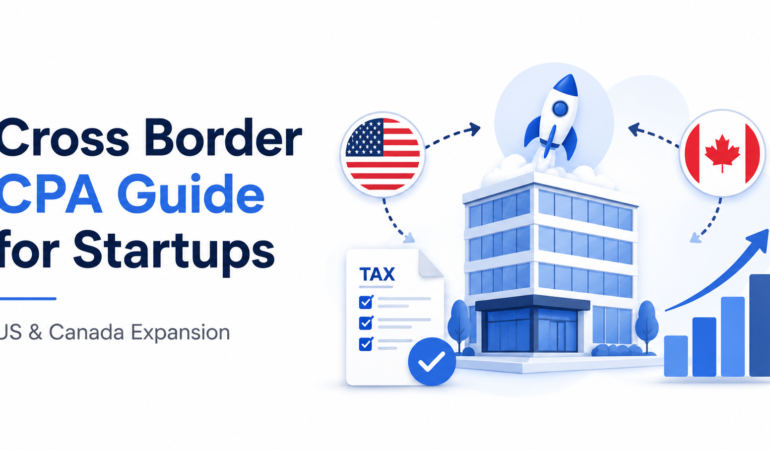
Cross Border CPA Guide for Startups Raising Capital Across the U.S. and Canada 

Expanding a startup across the U.S. and Canada opens the door to new customers, funding opportunities, and strategic partnerships. However, it also introduces complex tax obligations that many founders underestimate. 

From permanent establishment (PE) risks to transfer pricing rules and cross-border reporting requirements, overlooking a single compliance issue can lead to unexpected tax liabilities and significant penalties.

This is where Kapil Mahajan CPA Professional Corporation provides value. With expertise in U.S.–Canada taxation, the firm helps startups and growing businesses navigate complex regulations while building tax-efficient structures for sustainable growth. 

Working with a Cross Border CPA early in your expansion can help reduce compliance risks, optimize tax planning, and support long-term business success.

Why Every Startup Needs a Cross Border CPA

As businesses expand internationally, tax compliance becomes more than simply filing annual returns. Companies operating in both Canada and the United States must comply with two tax systems, reporting obligations, and treaty provisions.

A Cross Border CPA understands how both jurisdictions interact and can help businesses:

  • Structure cross-border operations efficiently
  • Reduce the risk of double taxation
  • Stay compliant with IRS and CRA requirements
  • Identify tax-saving opportunities
  • Support business expansion with strategic planning

Instead of addressing tax issues after they arise, proactive planning can save both time and money.

Understanding Permanent Establishment (PE)

One of the biggest tax risks for growing startups is creating a Permanent Establishment (PE) without realizing it.

A PE generally occurs when a business has sufficient business activity in another country, giving that country the right to tax part of the company’s profits.

Examples include:

  • Executives working regularly in the other country
  • Employees negotiating or signing contracts
  • Maintaining offices or business facilities
  • Sales representatives conducting core business activities

For example, if a Canadian technology startup hires a U.S.-based executive who regularly closes customer contracts, the IRS may determine that the company has established a U.S. Permanent Establishment.

Similarly, Canadian tax authorities may make similar assessments for U.S. companies operating in Canada.

Working with a Cross Border CPA before expanding operations helps identify these risks early and determine whether operational changes can minimize unnecessary tax exposure.

Transfer Pricing: More Than an Accounting Requirement

Many startups establish separate Canadian and U.S. entities for operational reasons.

Whenever these related entities exchange:

  • Intellectual property
  • Management services
  • Software development
  • Marketing services
  • Administrative support
  • Physical products

they must charge each other using fair market value pricing.

This process is known as transfer pricing.

Improper transfer pricing can result in:

  • Double taxation
  • Tax audits
  • Significant penalties
  • Disallowed deductions
  • Increased compliance costs

A properly documented transfer pricing agreement helps demonstrate that transactions occur under arm’s-length principles recognized by both the IRS and CRA.

An experienced Cross Border CPA can help develop documentation that supports pricing methodologies while reducing audit risks.

Understanding Form 5471 and T1134 Reporting

Many founders focus primarily on income taxes while overlooking information reporting requirements.

Two of the most important reporting obligations include:

IRS Form 5471

U.S. persons with ownership in certain foreign corporations may need to file Form 5471.

This form reports:

  • Corporate ownership
  • Financial statements
  • Related-party transactions
  • Corporate activities

Failure to file can result in substantial monetary penalties, even if no tax is owed.

CRA Form T1134

Canadian businesses with foreign affiliates may need to file Form T1134.

The form provides information regarding:

  • Foreign subsidiaries
  • Corporate ownership
  • Financial information
  • Cross-border transactions

Late or missing filings can trigger penalties and increased scrutiny from tax authorities.

Working with a Cross Border CPA ensures reporting obligations are identified well before filing deadlines.

Taking Advantage of Cross-Border Funding Opportunities

One advantage of operating in both countries is access to multiple innovation funding programs.

Depending on business activities, startups may qualify for programs such as:

U.S. Funding

  • SBIR (Small Business Innovation Research)
  • STTR funding
  • State innovation grants

Canadian Funding

  • NRC IRAP
  • SR&ED tax incentives
  • Provincial innovation programs

Many startups assume they can freely combine funding from both countries.

However, rules surrounding “double dipping” require careful planning.

Businesses generally cannot claim identical research expenses under both U.S. and Canadian funding programs.

Instead, qualifying costs must be properly allocated and documented.

A Cross Border CPA can help structure accounting records to maximize available incentives while maintaining compliance.

Common Cross-Border Tax Mistakes Startups Make

Growing businesses often encounter issues such as:

  • Expanding into another country without tax planning
  • Ignoring Permanent Establishment risks
  • Missing foreign reporting forms
  • Poor transfer pricing documentation
  • Incorrect payroll setup
  • Misclassifying employees and contractors
  • Claiming duplicate R&D incentives
  • Delaying cross-border tax advice until an audit occurs

These issues become more expensive to resolve after they occur than to prevent during expansion planning.

How Professional Cross-Border Tax Planning Supports Growth

As your company grows, tax planning should evolve alongside business operations.

Rather than focusing solely on compliance, proactive planning can help:

  • Improve cash flow
  • Support fundraising
  • Reduce audit exposure
  • Simplify international reporting
  • Protect intellectual property structures
  • Improve investor confidence
  • Prepare for acquisitions or expansion

Midway through your expansion journey, consulting Kapil Mahajan CPA Professional Corporation can provide valuable guidance tailored to U.S.–Canada business operations. 

Their cross-border expertise helps startups address compliance obligations while supporting strategic growth objectives with practical tax planning.

Choosing the Right Cross Border CPA

Not every accounting professional specializes in cross-border taxation.

When selecting a CPA, businesses should look for experience with:

  • U.S.–Canada Tax Treaty
  • CRA and IRS compliance
  • Transfer pricing
  • Cross-border business structuring
  • International reporting requirements
  • Startup tax planning
  • Cross-border funding programs

Choosing an advisor with specialized knowledge can help prevent costly mistakes before they affect business operations.

Conclusion

Scaling across the U.S. and Canada creates exciting opportunities, but it also introduces tax complexities that require careful planning. 

From Permanent Establishment risks and transfer pricing to foreign reporting forms and funding strategies, each decision can have lasting financial consequences.

Partnering with Kapil Mahajan CPA Professional Corporation gives startups access to experienced guidance designed to simplify cross-border taxation while supporting sustainable growth. 

Whether your business is entering a new market, establishing a subsidiary, or planning future expansion, working with a knowledgeable Cross Border CPA can help you stay compliant, reduce tax risks, and focus on building your business with confidence.

Contact Kapil Mahajan CPA Professional Corporation today to schedule a consultation with an experienced Cross Border CPA and receive tailored tax strategies that support your business growth while ensuring compliance on both sides of the border. 

FAQs

1. What does a Cross Border CPA do?

A Cross Border CPA helps individuals and businesses manage tax planning, compliance, reporting, and financial strategies when operating between the United States and Canada.

2. Why is Permanent Establishment important for startups?

Permanent Establishment can give another country the right to tax part of your business profits. Proper planning helps businesses understand and manage this risk before expanding.

3. What is transfer pricing?

Transfer pricing refers to the pricing of goods, services, intellectual property, or other transactions between related companies operating in different countries. Proper documentation is essential for tax compliance.

4. Can startups receive funding from both Canada and the United States?

Yes. Many startups can qualify for funding programs in both countries, but eligible expenses must be properly allocated to comply with double-dipping rules.

5. When should a business hire a Cross Border CPA?

Businesses should consult a Cross Border CPA before expanding into another country, opening a subsidiary, hiring cross-border employees, or engaging in international transactions. Early planning can help reduce tax risks and avoid costly compliance issues.

Read More
f43a198c aaa2 4d44 9120 12d34660f192 1

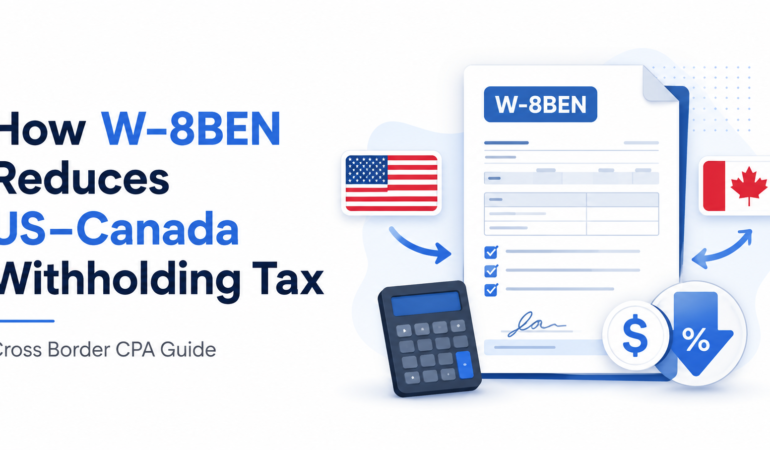
How W-8BEN Reduces US–Canada Withholding Tax | Cross Border CPA Guide for Treaty Benefits

Why Canadian Taxpayers Lose US Income Without Proper Filing

Kapil Mahajan CPA Professional Corporation provides specialized cross-border tax support for individuals and businesses earning income between the United States and Canada.

Many Canadian taxpayers unknowingly lose up to 30% of their US income because the W-8BEN form is missing or incorrectly filed. In most cases, US payers are legally required to apply default withholding when documentation is incomplete or missing treaty claims.

The W-8BEN form certifies non-US tax status and enables Canadian residents to claim benefits under the US–Canada tax treaty, which often reduces withholding significantly depending on income type.

A Cross Border CPA ensures correct filing so taxpayers avoid unnecessary withholding and remain fully compliant with IRS rules.

Disclaimer: Tax treaty regulations, withholding tax rates, and related tax provisions are subject to change. Readers should verify the latest applicable laws and consult a qualified tax advisor before relying on the information provided in this article. 

What is the W-8BEN Form and Who Needs It

The W-8BEN form is an IRS compliance document used by non-US individuals to declare foreign tax residency and claim treaty benefits.

It is commonly required for Canadians receiving:

  • US freelance or consulting income
  • Dividend or interest income from US investments
  • Royalty or licensing income
  • Remote contract or platform-based income

Without proper submission, the IRS applies a default 30% withholding rate regardless of eligibility for treaty relief.

A Canada US Tax Accountant Toronto helps determine correct income classification and ensures treaty claims are applied accurately and legally.

Why the US–Canada Tax Treaty Is Important for Withholding Tax

The US–Canada tax treaty exists to prevent double taxation and ensure income is taxed fairly between both countries.

Once a valid W-8BEN form is submitted, the treaty determines how much tax should actually be withheld based on income classification and residency status.

However, incorrect interpretation of treaty articles is a common issue, leading to over-withholding or compliance errors.

A Cross Border CPA ensures proper treaty application and alignment with Canadian reporting obligations.

Withholding Tax Rates Under the US–Canada Tax Treaty

Income TypeTreaty ArticleWithholding Rate
Business incomeArticle VII0% if no US permanent establishment
DividendsArticle X15%
InterestArticle XIUsually 0%
RoyaltiesArticle XII0% to 10% depending on structure

Incorrect classification or missing documentation often leads to unnecessary tax leakage and reduced net income.

How W-8BEN Reduces US–Canada Withholding Tax Step by Step

Step 1: US income is earned
Canadian individuals or businesses receive payments from US clients or institutions.

Step 2: US payer requests W-8BEN form
This form is required before payments can be processed without default withholding.

Step 3: Canadian tax residency is declared
The taxpayer confirms non-US residency and selects treaty eligibility.

Step 4: Reduced withholding is applied
Instead of 30%, treaty-based reduced or zero withholding is applied.

A Cross Border CPA ensures each step is completed correctly to prevent over-withholding and compliance issues.

W-8BEN Tax Reduction Process

  • US income earned
  • W-8BEN form requested
  • Canadian residency confirmed
  • Income classified under treaty rules
  • Cross-border tax review completed
  • US–Canada tax treaty applied
  • Reduced withholding implemented
  • Higher net income received

IRS Compliance Risk: What Happens If W-8BEN Is Incorrect

Incorrect filing can create serious tax issues, including:

  • Excess 30% withholding on all US income
  • Rejection of treaty benefits
  • IRS compliance mismatches for US payers
  • Delays in receiving payments
  • Potential audit queries in complex cases

This is why professional review by a Cross Border CPA is critical for anyone earning recurring US income.

How to Complete the W-8BEN Form Correctly

  1. Identify yourself
  • Full legal name
  • Canadian residential address
  • Citizenship details
  1. Provide tax identification
  • Canadian SIN used as Foreign Tax Identification Number (FTIN)
  1. Claim treaty benefits
    Select correct treaty article:
  • Article VII for business income
  • Article X for dividends
  • Article XI for interest
  • Article XII for royalties
  1. Submit the form
  • Submit directly to the US payer (not the IRS)

A Cross Border tax expert reviews documentation to ensure accuracy and compliance before submission.

Why Most Taxpayers Still Overpay US Tax

Even eligible taxpayers lose income due to:

  • Incorrect treaty article selection
  • Missing or incorrect SIN or FTIN
  • Misclassified income types
  • Outdated or incomplete W-8BEN form submissions
  • Lack of cross-border tax understanding

These issues consistently lead to unnecessary withholding at the default 30% rate.

Why Cross-Border Tax Expertise Is Essential

Cross-border taxation involves more than form submission. It requires:

  • Treaty interpretation
  • Income classification accuracy
  • IRS and CRA compliance alignment
  • Proper cross-border reporting structure

A Cross Border CPA provides:

  • Treaty-based tax optimization
  • IRS compliance assurance
  • Cross-border income structuring
  • Audit-ready documentation
  • Withholding tax reduction strategies

A Canada US Tax Accountant Toronto ensures Canadian tax reporting remains fully aligned with US income treatment.

Kapil Mahajan CPA Professional Corporation specializes in structured cross-border tax advisory for Canadian taxpayers earning US income.

Real Experience: Cross-Border Tax Case Insight

A Canadian consultant working with multiple US clients was consistently facing 30% withholding due to incorrect W-8BEN form filing.

After professional review by Kapil Mahajan CPA Professional Corporation, the Cross Border CPA corrected treaty classification and updated documentation with US payers. This resulted in reduced withholding on future payments and improved cash flow.

Outcome:

  • Reduced withholding tax burden
  • Improved compliance accuracy
  • Better cash flow consistency
  • Correct treaty application

Avoid Losing Income Due to Incorrect Filing

Incorrect W-8BEN form filing directly reduces your take-home income.

A cross border tax expert ensures:

  • Correct treaty application
  • Full IRS compliance
  • Maximum withholding reduction

If uncertain, a Canada US Tax Accountant Toronto can review your situation before submission.

Why Choose Professional Cross-Border Support

US–Canada taxation is complex due to:

  • Dual tax systems
  • Treaty-based withholding rules
  • Cross-border reporting obligations
  • Income classification challenges

Kapil Mahajan CPA Professional Corporation provides expert cross-border tax advisory services including W-8BEN form filing, treaty optimization, and compliance planning.

Maximize Your US Income Efficiency

Proper W-8BEN form filing ensures Canadian taxpayers are not over-taxed on US income.

With support from a Cross Border tax advisor, you can:

  • Reduce withholding tax legally
  • Ensure full IRS compliance
  • Improve cross-border income efficiency

Contact Kapil Mahajan CPA Professional Corporation for professional assistance in W-8BEN form filing and US–Canada tax treaty optimization.

FAQs

1. What is Form W-8BEN used for in US–Canada tax rules?

Form W-8BEN is used by non-US individuals, including Canadians, to certify foreign tax residency and claim benefits under the US–Canada tax treaty. It helps reduce or eliminate default US withholding tax on income earned from US sources.

2. How does W-8BEN reduce withholding tax for Canadians?

The W-8BEN form allows Canadian taxpayers to apply treaty rates instead of the standard 30% US withholding tax. Depending on income type such as dividends, interest, or business income, withholding can be reduced significantly or eliminated.

3. Who needs to submit a W-8BEN form?

Canadian individuals earning US-sourced income such as freelance payments, consulting fees, dividends, royalties, or online platform income need to submit the W-8BEN form to avoid automatic US tax withholding.

4. What happens if W-8BEN is not submitted correctly?

If the W-8BEN form is missing or incorrect, US payers must apply a default 30% withholding tax. This often results in overpayment of tax and delayed correction unless treaty benefits are properly claimed. In such cases, a Cross Border CPA can help identify errors and correct treaty application to reduce unnecessary withholding.

5. Is W-8BEN required for all Canadian freelancers working with US clients?

Yes, most Canadian freelancers or independent contractors earning US income are required to submit W-8BEN to ensure correct tax treatment under the US–Canada tax treaty and avoid unnecessary withholding. A Canada US Tax Accountant Toronto can help ensure proper classification and accurate cross-border tax compliance.

Read More
Cross Border Tax Accountants

Moving Between Canada and the US? A Cross Border Tax Accountants Guide

Moving between Canada and the United States can be an exciting new chapter. Whether you’re relocating for work, business opportunities, education, retirement, or family reasons, the transition often involves more than packing boxes and updating your address.

Cross-border moves can significantly impact your tax obligations, investments, retirement accounts, and reporting requirements. Unfortunately, many people discover these complexities only after they have moved, leading to unexpected tax bills, missed filings, and compliance challenges.

Kapil Mahajan CPA Professional Corporation helps individuals, families, professionals, and business owners navigate these challenges with confidence. 

By working with experienced cross border tax accountants, you can better understand your obligations, avoid costly mistakes, and make informed financial decisions before and after your move.

Why Moving Across the Border Changes Your Tax Situation

The moment you relocate between Canada and the United States, your tax status may change.

Tax authorities look beyond your physical location when determining your tax residency. Several factors can influence where and how you are taxed, including:

  • Your permanent residence
  • Family and personal ties
  • Employment location
  • Business interests
  • Bank accounts and investments
  • Time spent in each country
  • Property ownership

Your residency status can affect:

  • Where you pay income tax
  • Which tax returns you must file
  • How investment income is taxed
  • Foreign asset reporting requirements
  • Access to tax treaty benefits

Understanding these rules early can help prevent surprises later.

Key Tax Considerations Before Moving

Proper planning before your move can create opportunities to reduce future tax liabilities and avoid compliance issues.

If You’re Moving From Canada to the United States

Before becoming a U.S. resident, you may need to consider:

  • Departure tax implications
  • Canadian residency termination rules
  • Tax treatment of investment accounts
  • Retirement account planning
  • Real estate ownership considerations
  • Future Canadian filing obligations

Certain assets may be subject to deemed disposition rules when leaving Canada, potentially creating taxable events.

If You’re Moving From the United States to Canada

Individuals moving north of the border should evaluate:

  • Canadian residency rules
  • U.S. tax filing obligations
  • Foreign income reporting requirements
  • Investment account structures
  • Pension and retirement planning
  • Asset disclosure obligations

Because U.S. citizens generally remain subject to U.S. tax filing requirements regardless of where they live, proper planning is especially important.

Understanding Your Tax Filing Obligations

One of the most common concerns among cross-border movers is whether they must file taxes in one country or both.

The answer depends on several factors, including residency, citizenship, income sources, and tax treaty provisions.

Filing RequirementPotential Applicability
Canadian Income Tax ReturnCanadian residents and certain non-residents
U.S. Federal Tax ReturnU.S. citizens and residents
State Tax ReturnDepending on state residency rules
Foreign Asset ReportingBased on asset values and ownership
Information ReturnsCertain foreign investments and entities

Missing a filing requirement can lead to penalties even when no tax is owing.

This is one reason why many individuals seek guidance from experienced cross border tax accountants before relocating.

How Investments Can Be Affected by a Cross-Border Move

Many people do not realize that investment accounts can be treated differently after moving.

Assets that may require review include:

  • Registered retirement accounts
  • Brokerage accounts
  • Mutual funds
  • Corporate shares
  • Rental properties
  • Trust interests

Without proper planning, an otherwise successful investment strategy could create unexpected tax complications.

Investment Planning Checklist

Asset TypeImportant Consideration
Retirement AccountsCross-border tax treatment
Investment PortfoliosCapital gains implications
Rental PropertiesOngoing reporting requirements
Private CorporationsOwnership and compliance issues
Trust InterestsAdditional disclosure obligations
Foreign AssetsReporting thresholds and requirements

A pre-move review can help identify potential risks and opportunities.

Employment Income and Business Ownership Considerations

If you earn income across borders, additional planning may be necessary.

Questions worth considering include:

  • Will you continue working for your current employer?
  • Will you earn income in both countries?
  • Are you self-employed or operating a business?
  • Will payroll withholding obligations change?
  • Do tax treaty provisions apply?

Business owners often face even greater complexity when managing operations, clients, or investments across Canada and the United States.

Kapil Mahajan CPA Professional Corporation regularly assists professionals and entrepreneurs with cross-border tax planning designed to support both compliance and long-term financial goals.

The Canada-US Tax Treaty: Why It Is Vital

Canada and the United States have a tax treaty designed to help reduce instances of double taxation.

The treaty can provide guidance regarding:

  • Tax residency determination
  • Employment income taxation
  • Pension and retirement income
  • Dividend and interest income
  • Capital gains treatment
  • Foreign tax credits

While the treaty provides valuable benefits, applying its provisions correctly requires careful analysis of your specific situation.

Common Mistakes People Make When Moving

Many cross-border tax problems stem from a lack of planning.

Some of the most common mistakes include:

  • Waiting until after the move to seek tax advice
  • Failing to establish residency properly
  • Ignoring departure tax considerations
  • Overlooking foreign reporting obligations
  • Maintaining investments that create unnecessary tax issues
  • Missing filing deadlines
  • Assuming tax treaties eliminate all tax liabilities

These mistakes can often be avoided through proactive planning.

Why Working With Cross Border Tax Accountants Matters

Relocating between Canada and the United States means navigating two separate tax systems that frequently overlap.

Experienced cross border tax accountants can help you:

  • Understand residency implications
  • Meet filing obligations
  • Review investment structures
  • Identify tax-saving opportunities
  • Minimize compliance risks
  • Avoid costly reporting errors

Kapil Mahajan CPA Professional Corporation works closely with clients throughout the relocation process, helping them make informed decisions that support both compliance and financial efficiency.

Key Insights for Cross-Border Movers

Key InsightWhy It Is Important
Residency drives tax obligationsYour tax status affects filing and reporting requirements
Planning before the move creates opportunitiesMany tax-saving strategies must be implemented early
Investments should be reviewedAsset structures may have different tax treatment
Dual filing obligations may existSome individuals must file in both countries
Professional guidance reduces riskExpert advice helps avoid common mistakes

Expert Insight

One of the biggest misconceptions surrounding cross-border relocation is that tax planning can wait until after the move is complete.

In reality, some of the most valuable planning opportunities exist before residency changes occur. Reviewing investments, understanding reporting obligations, evaluating departure tax implications, and assessing treaty benefits ahead of time can make a substantial difference.

The team at Kapil Mahajan CPA Professional Corporation frequently helps clients identify potential issues before they become costly problems, creating a smoother and more tax-efficient transition between Canada and the United States.

Real-Life Scenario

Consider a Canadian executive relocating to the United States while maintaining investment accounts and a rental property in Canada.

Without proper planning, they may face:

  • Unexpected reporting obligations
  • Double taxation concerns
  • Compliance issues involving foreign assets
  • Missed tax-saving opportunities

With guidance from experienced cross border tax accountants, these issues can often be addressed before relocation, reducing both risk and uncertainty.

Planning a Move Between Canada and the US?

A cross-border move affects far more than your address. It can influence your tax obligations, investments, retirement planning, reporting requirements, and long-term financial strategy.

Kapil Mahajan CPA Professional Corporation provides specialized Canada-US tax planning and compliance services designed to help individuals and businesses navigate complex cross-border matters with confidence.

Schedule a Consultation

If you are planning a move between Canada and the United States, now is the ideal time to review your tax position. 

Connect with Kapil Mahajan CPA Professional Corporation to discuss your situation and receive personalized guidance from experienced cross border tax accountants who understand the complexities of Canada-US taxation.

FAQs

1. When should I speak with cross border tax accountants before moving?

Ideally, several months before your relocation. Early planning often creates additional tax-saving opportunities and helps avoid unexpected complications.

2. Will I need to file tax returns in both Canada and the United States?

Depending on your residency status, citizenship, and income sources, you may have filing obligations in both countries.

3. Can moving trigger capital gains tax?

Yes. Certain assets may be subject to departure tax rules or other tax consequences when residency changes.

4. How can Kapil Mahajan CPA Professional Corporation help with a cross-border move?

The firm assists with residency planning, tax compliance, foreign reporting, treaty analysis, investment considerations, and long-term tax strategies.

5. Why is professional cross-border tax advice important?

Cross-border taxation involves complex rules that can affect your finances significantly. Professional guidance helps ensure compliance while identifying opportunities to improve your tax position.

Read More
Cross Border Tax and Accounting

How Exchange Rates Affect Cross Border Tax and Accounting

Doing business, investing, or earning income across Canada and the United States presents significant opportunities, but it also introduces unique tax and accounting complexities. One factor that is frequently underestimated is the impact of currency exchange rates.

A change in the value of the Canadian dollar against the U.S. dollar can influence taxable income, capital gains, business profits, financial reporting, and overall tax obligations. 

Whether you are an entrepreneur, investor, remote worker, or corporation with cross-border activities, understanding how exchange rates affect your finances is essential.

Kapil Mahajan CPA Professional Corporation helps individuals and businesses navigate the complexities of cross border tax and accounting, providing strategic guidance that supports compliance, minimizes risk, and improves financial outcomes on both sides of the border.

Why Currency Exchange Rates Are Paramount for Cross-Border Tax Planning

Every cross-border transaction involves currency conversion. Tax authorities in Canada and the United States require income, expenses, assets, and gains to be reported in the taxpayer’s reporting currency.

This means exchange rate fluctuations can affect:

  • Business revenue reporting
  • Employment income
  • Investment returns
  • Capital gains calculations
  • Rental income reporting
  • Foreign asset disclosures
  • Corporate financial statements

Even when the underlying transaction has not changed in value, currency movements can create additional tax consequences.

Common Areas Impacted by Exchange Rates

Cross-Border ActivityPotential Tax Impact
Employment IncomeChanges in reportable income values
Business RevenueVariations in taxable profits
Investment IncomeForeign exchange gains or losses
Rental Property IncomeDifferent taxable amounts after conversion
Capital Asset SalesCurrency-driven capital gains
Retirement WithdrawalsReporting and tax calculation adjustments

For individuals and corporations involved in cross border tax and accounting, proper currency conversion is not optional, it is a critical compliance requirement.

The Hidden Tax Cost of Currency Fluctuations

One of the biggest misconceptions among taxpayers is that exchange rates only matter when money is converted between bank accounts.

In reality, exchange rates can create taxable gains or losses even when no economic gain has occurred.

Consider an investor who purchases a U.S. investment and later sells it for the same U.S. dollar amount. If the U.S. dollar strengthens against the Canadian dollar during that period, the investor may still report a gain for Canadian tax purposes.

Example: Currency-Driven Capital Gain

Transaction StageUSD AmountExchange RateCAD Value
Investment Purchase$100,0001.25$125,000
Investment Sale$100,0001.40$140,000

In this example, the investment generated no gain in U.S. dollars. However, the taxpayer may still recognize a taxable gain because of currency appreciation.

This is one reason why working with an experienced Cross border CPA can help prevent costly surprises during tax season.

How Exchange Rates Affect Cross-Border Businesses

Businesses operating between Canada and the United States face additional accounting challenges.

A company may:

  • Invoice clients in U.S. dollars
  • Pay vendors in Canadian dollars
  • Maintain foreign bank accounts
  • Hold U.S.-based assets
  • Report financial results in Canada

As exchange rates fluctuate, the value of receivables, payables, revenues, and expenses can change significantly.

These fluctuations may impact:

  • Corporate tax liabilities
  • Profitability reporting
  • Cash flow management
  • Budget forecasting
  • Financial statement accuracy
  • Cross-border compliance requirements

Without proper planning, currency movements can distort financial performance and create unexpected tax obligations.

Currency Exchange and Canada-U.S. Tax Compliance

Cross-border taxpayers often face reporting requirements in more than one jurisdiction. Currency conversion becomes especially important when preparing tax returns and financial disclosures.

Common situations include:

  • Canadians earning income in the United States
  • U.S. citizens residing in Canada
  • Dual citizens
  • Cross-border consultants
  • Remote employees
  • Investors holding foreign assets
  • Businesses with operations in both countries

Errors in exchange rate calculations can result in:

  • Overpayment of taxes
  • Underreported income
  • Penalties and interest
  • Increased audit risk
  • Delayed filings

Accurate reporting is a key component of effective cross border tax and accounting services.

Strategic Currency Planning Can Reduce Tax Exposure

While businesses and individuals cannot control exchange rate movements, they can plan for their impact.

Effective strategies often include:

  • Reviewing the timing of major transactions
  • Tracking exchange rates throughout the year
  • Maintaining accurate records of foreign transactions
  • Evaluating foreign currency exposure
  • Structuring cross-border operations efficiently
  • Coordinating tax planning across both jurisdictions

These proactive measures can help reduce unnecessary tax burdens and strengthen long-term financial planning.

Why Local Expertise Is Paramount

Cross-border tax issues require more than basic accounting knowledge. They demand a deep understanding of both Canadian and U.S. tax systems, reporting requirements, and financial regulations.

Individuals seeking assistance with taxes Edmonton Alberta often require guidance on foreign income reporting, investment taxation, and cross-border compliance.

Similarly, businesses and professionals looking for a trusted Canada US tax accountant Toronto need advisors who understand the tax implications of operating in multiple jurisdictions.

The right guidance can help identify opportunities, avoid reporting errors, and support informed financial decision-making.

Key Insights

Important ConsiderationWhy It Is Vital
Exchange rates affect taxable incomeCurrency movements can increase or decrease reported income
Capital gains may arise from currency changesAsset values are not the only factor influencing gains
Cross-border businesses face additional complexityAccounting and tax reporting become more challenging
Accurate conversion methods are essentialImproper calculations can trigger compliance issues
Strategic planning reduces riskProactive tax management can improve outcomes

Expert Insight

Many taxpayers focus solely on the tax rates applicable to their situation while overlooking the impact of foreign exchange movements. 

In practice, exchange rates often influence tax liabilities more than expected, particularly for investors, business owners, and professionals with ongoing U.S.-Canada transactions.

Professionals working in cross border tax and accounting regularly encounter situations where taxpayers pay more tax than necessary simply because currency implications were not considered during planning. Early analysis and strategic guidance can make a substantial difference.

Need Guidance on Canada-U.S. Tax Matters?

Cross-border taxation involves far more than filing returns. Currency fluctuations, reporting obligations, investment structures, and business operations all require careful consideration.

Kapil Mahajan CPA Professional Corporation provides tailored solutions for individuals, entrepreneurs, investors, and corporations managing financial interests in both Canada and the United States.

Whether you need a knowledgeable Cross border CPA, assistance with taxes Edmonton Alberta, or an experienced Canada US tax accountant Toronto, professional guidance can help you stay compliant while identifying opportunities to improve your tax position.

Speak With a Cross-Border Tax Professional

Managing finances across Canada and the United States requires careful planning, accurate reporting, and a clear understanding of currency-related tax implications.

Kapil Mahajan CPA Professional Corporation helps clients simplify complex cross-border tax challenges while building strategies that support long-term financial success.

Contact the team today to discuss your cross border tax and accounting needs and receive personalized guidance designed for your unique situation.

FAQs

1. How do exchange rates affect cross border tax and accounting?

Exchange rates influence how income, expenses, investments, and assets are reported for tax purposes. Currency fluctuations can increase or decrease taxable amounts even when the underlying transaction remains unchanged.

2. Can currency fluctuations create capital gains?

Yes. A taxpayer may recognize a taxable gain due solely to changes in exchange rates, even if the investment itself has not increased in value.

3. Why should I hire a Cross border CPA?

A Cross border CPA understands the interaction between Canadian and U.S. tax systems and can help ensure accurate reporting, compliance, and strategic tax planning.

4. Do businesses operating in both countries need specialized accounting support?

Yes. Cross-border businesses often face complex reporting, currency conversion, financial statement, and tax compliance requirements that require specialized expertise.

5. How can Kapil Mahajan CPA Professional Corporation help with Canada-U.S. tax planning?

Kapil Mahajan CPA Professional Corporation assists individuals and businesses with cross-border tax planning, compliance, reporting, foreign income matters, and strategic tax solutions tailored to Canada-U.S. financial activities.

Read More

How to Choose the Right Cross Border Tax Accountant in Calgary or Vancouver 

If you’re living between the U.S. and Canada, taxes stop being routine pretty quickly.

One return turns into two. Reporting rules overlap. Deadlines don’t match. And the smallest mistake, something as simple as missing a disclosure, can lead to penalties that feel completely disproportionate. 

In fact, U.S. reporting rules like FBAR can carry penalties of up to $10,000 per non-willful violation, which is often where people realize the stakes are higher than expected.

That’s usually the point where people start searching for a cross border tax accountant Calgary or a cross border tax accountant Vancouver.

At firms like Kapil Mahajan CPA Professional Corporation, clients often reach out when they want greater clarity, accuracy, and confidence in their cross-border tax filings.

This guide is meant to help you avoid costly filing mistakes when it comes to U.S.-Canada tax.

Why Cross Border Taxes Are Not “Just Accounting”

A general accountant might be excellent with local filings. But cross-border tax work sits in a completely different category.

You’re dealing with:

  • Two tax systems (IRS + CRA)
  • Foreign asset disclosures (FBAR, FATCA)
  • Tax treaties that override domestic rules
  • Currency conversions and timing mismatches

A typical accountant won’t miss a T4. But they might miss a treaty election or misreport foreign income, which is where real damage happens.

That’s why choosing from experienced cross border tax accountants is less about convenience and more about risk control.

Top Mistakes that Occur Without the Professional Accountant

Before choosing a skilled cross border tax accountant be sure about

Common (and expensive) mistakes:

  • Filing in the wrong country first
  • Missing FBAR or FATCA reporting
  • Double taxation due to poor credit application
  • Incorrect residency status classification
  • Ignoring U.S. state tax obligations

Real-World Cross-Border Tax Risk Snapshot (2026)

Issue TypeEstimated FrequencyPotential Impact
Missed foreign reporting (FBAR/FATCA)HighHeavy penalties
Double taxation errorsModerateFinancial loss
Residency misclassificationHighAudit risk
Incorrect tax treaty applicationModerateOverpayment
Late filingsVery HighPenalties + stress

Step-by-Step: How to Choose the Right Cross Border Tax Accountant

How to choose the right cross border tax accountant?

Selection Process 

Start → Identify Your Situation → Check Cross-Border Specialization → Review Experience with U.S.-Canada Cases → Evaluate Communication Clarity → Compare Pricing Transparency → Final Decision

1. Look Beyond “Tax Accountant” — Check Specialization

Not everyone advertising tax services is equipped for cross-border complexity.

Search intent matters here:

  • If you’re in Alberta → cross border tax accountant Calgary
  • If you’re in BC → cross border tax accountant Vancouver

But beyond location, confirm:

  • Do they handle U.S.-Canada filings regularly?
  • Are they familiar with IRS compliance requirements?

2. Evaluate Real Experience, Not Just Claims

A credible accountant should be able to explain the following:

  • How they handle dual filings
  • Examples of past client situations
  • How they manage IRS + CRA coordination

In this line, firms like Kapil Mahajan CPA Professional Corporation stand out; we simplify the approach to complex filings. 

3. Check Their Process 

A strong accountant won’t jump straight into filing. They’ll:

  • Assess residency
  • Review past filings
  • Identify risks
  • Plan the filing strategy

What a Good Accountant’s Process Looks Like

Initial Consultation → Document Review → Risk Assessment → Tax Strategy Planning → Filing Execution → Post-Filing Support

4. Transparency Around Pricing

Cross-border tax services aren’t cheap. So, in this case, clarity is vital.

Typical Pricing Comparison

Service TypeGeneral AccountantCross Border Specialist
Basic filingLowerModerate
Dual-country filingsLimitedIncluded
IRS compliance supportRareStandard
Risk mitigationMinimalStrong
Advisory supportLimitedOngoing

Note: These are indicative ranges. Actual costs vary depending on complexity and individual circumstances.

5. Communication Style is Paramount

If your cross border tax accountant Calgary or a cross border tax accountant Vancouver can’t explain:

  • why a certain form or tax filing is required
  • what risks are involved if something is missed
  • what choices you have, and which one makes the most sense for you when it comes to cross border tax filing

Clarity = confidence.

If there is no transparency regarding the cross border tax filing, it’s easy to feel unsure, even if everything is technically being handled.

2026 Trends Shaping Cross Border Tax Services

The cross border tax sphere is evolving fast. Here’s what’s changing:

Top Trends

TrendWhat It Means for You
Increased IRS enforcementMore scrutiny on foreign assets
Digital reporting systemsFaster data sharing between countries
Remote tax advisoryAccess to specialists beyond your city
Rising expat populationHigher demand for expertise

Key Market Drivers

  • Growing number of U.S. citizens working in Canada
  • Remote work enabling cross-border income streams
  • Increased regulatory enforcement
  • More awareness around compliance risks

Challenges Clients Still Face

  • Understanding residency rules
  • Managing dual deadlines
  • Finding genuinely experienced professionals
  • Balancing cost vs expertise

Where Most People Struggle

Move to Canada → Assume Simple Filing → Miss U.S. Obligations → Face Compliance Issues → Seek Specialist Help → Correct Errors

Calgary vs Vancouver: Does Location Matter?

If you’re comparing a cross border tax accountant Vancouver or Calgary, it’s important to look beyond location.

Location-Based Considerations

FactorCalgaryVancouver
Industry profileEnergy, corporate rolesTech, startups, remote workers
Cross-border activityModerateHigh
Demand for specialistsGrowingEstablished
Access to firmsGoodExtensive

What matters more is not the city, but the expertise.

Still, searching for a cross border tax accountant Calgary or Vancouver helps you find professionals familiar with local financial ecosystems.

What a Good Cross Border Tax Accountant Will Actually Do

  • Prevent double taxation
  • Align IRS + CRA filings
  • Identify risk areas early
  • Guide long-term tax planning

That’s the difference between reactive filing and proactive strategy.

Outlook: What to Expect Moving Forward

Cross-border taxation is only getting stricter.

Looking ahead:

  • Reporting requirements will increase
  • Enforcement will become more automated
  • Errors will be detected faster

Which means the cost of getting it wrong will rise.

Working with experienced cross border tax accountants will shift from being optional to essential.

Conclusion

Most people wait until something feels uncertain in their tax filings before reaching out to a cross-border specialist. 

However, taking a proactive approach and working with the right professional from the start can help you avoid unnecessary complications later.

Whether you’re searching for a cross border tax accountant Calgary or a cross border tax accountant Vancouver, the goal is the same: clarity, compliance, and confidence.

Firms like Kapil Mahajan CPA Professional Corporation work with individuals who want to avoid uncertainty, not fix it later.

If you’re dealing with U.S.–Canada tax obligations and want clarity on where you stand, it’s worth having a conversation before the next filing cycle begins.

Schedule a consultation and understand your situation properly, before it turns into a costly mistake.

FAQs 

1. Do I really need a cross border tax accountant in Calgary or Vancouver?

If you have income, assets, or residency ties in both the U.S. and Canada, working with a specialist helps you avoid penalties and double taxation.

2. What’s the difference between a regular accountant and cross border tax accountants?

Cross border specialists handle dual filings, IRS compliance, and treaty applications; areas most general accountants don’t cover deeply.

3. How much does a cross border tax accountant cost in Calgary or Vancouver?

Costs vary based on complexity. Simple cases may be lower, while dual filings with reporting requirements can cost more.

4. Can I file U.S. and Canadian taxes on my own?

Technically yes, but the risk of errors is high, especially with foreign reporting requirements.

5. When should I hire a cross border tax accountant?

Ideally before your first filing cycle involving both countries, not after issues arise.

Read More

U.S.–Canada Tax Filing in 2026: A Guide by a Tax Accountant Toronto for Cross-Border Income

If you are living in Toronto and earning income that connects to the United States, tax season can feel more complicated than expected.

U.S.-Canada tax filing usually starts small. Maybe a U.S. client. Maybe an old account. Maybe a job that pays in USD. 

Then, filing time arrives, and questions start coming up. What needs to be reported where? Why are there two different systems asking for similar information? Are you paying more tax than you should?

This is typically the point where people begin looking for a tax accountant Toronto professionals rely on, and names like Kapil Mahajan CPA Professional Corporation come into the picture.

This guide walks through U.S.-Canada tax filing in 2026, without overcomplicating the process.

When Cross-Border Tax Becomes Part of Your Life

Most people do not plan for cross-border taxation. It tends to happen gradually.

You might find yourself in this situation if

  • You live in Toronto but work remotely for a U.S. company
  • You hold investments or property in the United States
  • You moved between Canada and the U.S. in recent years
  • You have dual citizenship
  • You receive payments in USD while filing taxes in Canada

None of these feels unusual on its own. The complexity comes from how both countries expect that information to be reported.

That is typically when people start looking for a cross border tax accountant in Toronto to solve the tax filing issues and complications.

Top 5 Drivers in Cross-Border Tax Filing in 2026

A few real-world shifts are behind this change

  • More people in Canada are working remotely for U.S. companies
  • Freelance and consulting payments in USD are much more common now
  • Investment platforms have made it easier to hold U.S. assets from Canada
  • Tax authorities on both sides now share financial data more closely than before
  • Foreign income reporting has become something most people can’t ignore anymore

What’s Changing in Cross-Border Tax Filing in 2026

Earlier situationWhat it looks like now
Income was self-reported with fewer checksIncome is matched across systems
Foreign accounts were easier to missReporting is more closely tracked
USD freelance work was loosely documentedNow more consistently recorded
Tax credits were used occasionallyNow a standard part of filing
Errors were often corrected laterIssues are flagged earlier

How Canada and the U.S. Tax the Same Income for Toronto Residents

Read on to know how Canada and the U.S. tax the same income for Toronto residents.

Canada focuses on residency, while the United States focuses on citizenship.

That difference affects how your income is taxed and reported.

SituationCanada’s ApproachU.S. Approach
You live in TorontoTaxed on global incomeStill taxed if you are a U.S. citizen
You earn in USDMust be reported in CADIncluded in global reporting
Foreign accountsReport if thresholds are metSeparate reporting required

This overlap is where confusion usually begins. Without a clear approach, the same income can be reported incorrectly or taxed inefficiently.

U.S.–Canada Tax Filing Process 2026

Filing taxes is rarely as simple as ticking boxes. In practice, it’s a series of steps that naturally build on one another.

How Cross-Border Filing Usually Happens

You review your income sources

You identify what comes from the U.S.

You check Canadian reporting requirements

You check U.S. filing obligations

You align both filings carefully

You apply credits to avoid double taxation

You review everything before submission

Each step seems manageable. The challenge is making sure they all fit together correctly.

Key U.S.–Canada Tax Filing Mistakes to Prevent

Mistakes in cross-border tax rarely come from a lack of effort. They usually come from assumptions—

  • Someone assumes that tax withheld in the U.S. means nothing else is required.
  • Someone assumes small amounts do not need to be reported.
  • Someone assumes filing in one country is enough.

That is where tax filing issues begin.

Common Mistakes and Their Impact: U.S.–Canada Tax Filing

SituationOutcome
U.S. income not reported in CanadaReassessment and added tax
Missing foreign account reportingPenalties that feel unexpected
Incorrect use of tax creditsPaying more than necessary
Misunderstanding residencyOngoing filing confusion
Ignoring treaty provisionsMissed opportunities to reduce tax

These situations are more common than most people expect, especially when relying only on software or general advice.

Top Questions Related to U.S.–Canada Tax Filing

“Am I going to pay tax twice?”

In most cases, no. But it depends on how your filings are handled.

There are systems in place to prevent double taxation. The key is applying them properly.

How Double Taxation is Avoided

Income earned in the U.S.

Reported in Canada

Tax already paid in the U.S. is calculated

A foreign tax credit is applied in Canada

Final tax liability is adjusted

When this tax filing process is followed correctly, it balances out. When it is not, people often end up paying more than they should.

U.S.–Canada Tax Filing: A Real-World Scenario

A Toronto-based professional starts working with a U.S. client. Payments are received in USD. Some tax is withheld.

They file in Canada and assume everything is covered.

Later, they realize

  • A U.S. return was still required
  • Credits were not applied properly
  • An additional tax was paid unnecessarily

At this stage, most people reach out to a tax accountant Toronto to understand what went wrong.

Once reviewed, the issue is usually fixable. But it often takes extra time and effort that could have been avoided earlier.

Why Working with a Tax Accountant Toronto is Important

Cross-border tax is not just about compliance. It is about making sure your financial position is handled properly.

Working with a skilled accountant changes how you approach the process.

A cross border tax accountant in Toronto can help you

  • Understand how both tax systems apply to your situation
  • Use available credits and treaty benefits effectively
  • Avoid penalties linked to missed reporting
  • Plan instead of correcting mistakes later

Professionals at Kapil Mahajan CPA Professional Corporation work with individuals dealing with U.S. and Canada tax obligations regularly. 

Contact us now to solve your U.S.-Canada tax filing issues. 

When Should One Consult A Tax Accountant Toronto 

One should contact a tax accountant Toronto if

  • You recently moved between countries
  • Your income structure changed
  • You started earning in a different currency
  • You have not filed in one country for some time
  • You want to reduce your tax burden within legal limits

Early clarity usually prevents last-minute stress.

Simple Habits That Make Filing Easier | Key Insights from U.S.–Canada Tax Filing Accountants

A few simple tips can make a noticeable difference when it comes to U.S.–Canada tax filing.

  • Keep track of where your income is coming from
  • Record exchange rates used for conversions
  • Save documents related to foreign income and accounts
  • Review your situation once a year, not just during filing

These small steps reduce confusion when it is time to file U.S.–Canada taxes.

Planning Ahead: Managing Cross-Border Taxes Beyond a Single Year

Managing cross-border taxes is not just a one-time task. Once your financial life spans Canada and the U.S., tax considerations become ongoing. The key difference lies in how you approach planning.

  • If handled reactively, cross-border filing can feel stressful every year.
  • If managed proactively, the process becomes predictable and manageable.

With consistent planning, you can

  • Avoid unnecessary tax payments by correctly applying foreign tax credits
  • Stay fully compliant with both Canadian and U.S. regulations
  • Make smarter financial decisions that account for long-term tax implications

This proactive approach usually begins when you transition from basic filing to structured planning with a tax accountant Toronto.

Conclusion

Most Toronto residents do not actively plan for cross-border taxation until it becomes necessary. As work, investments, or financial activities expand across borders, tax situations often grow more complex.

The most important step is recognizing when your circumstances are no longer straightforward. If your income, assets, or financial connections involve both Canada and the U.S., taking a structured approach now can prevent costly mistakes and streamline future filings.

Get Expert Guidance for Your Cross-Border Taxes

If you are unsure whether your filings are accurate or want to avoid penalties and unnecessary taxes, speaking with a professional can save time and money.

Kapil Mahajan CPA Professional Corporation specializes in helping individuals navigate U.S.–Canada tax obligations. A clear understanding of your situation ensures compliance and peace of mind.

Schedule a call today to review your situation and take the stress out of tax season.

Do I need a tax accountant Toronto for U.S.–Canada cross-border income?

Yes. If your income, assets, or investments involve both Canada and the U.S., a tax accountant Toronto can help you stay compliant, apply foreign tax credits, and avoid penalties. Cross-border taxation can get complex quickly, and professional guidance ensures accuracy and peace of mind.

What does a cross border tax accountant in Toronto do?

A cross border tax accountant in Toronto specializes in handling taxes that involve both Canada and the U.S. 
They can prepare and file U.S. and Canadian tax returns, apply treaty benefits to prevent double taxation, advise on reporting foreign accounts and investments, and plan long-term tax strategies to reduce liabilities.

How can I avoid paying double tax on U.S.–Canada income?

By working with a tax accountant Toronto, you can ensure foreign tax credits are applied correctly. Income earned in the U.S. can often offset Canadian taxes, preventing double payment. Proper reporting of foreign accounts and treaty provisions is key to reducing tax liability legally.

When should I hire a cross border tax accountant in Toronto?

It’s best to consult a cross border tax accountant in Toronto
– When you move between Canada and the U.S.
– When you start earning in USD or from U.S. sources.
– If you own property, investments, or bank accounts in the U.S.
– When planning long-term financial strategies to avoid unnecessary tax.
– Early consultation helps prevent mistakes and saves money.

What are common mistakes Toronto residents make in cross-border tax filings?

Typical errors include
– Assuming U.S. tax withheld is enough
– Skipping disclosure of small foreign accounts
– Filing in one country and delaying the other
– Misapplying treaty benefits
– A tax accountant Toronto helps identify these pitfalls before they become costly issues.

Read More

FBAR Penalties Explained: What U.S. Taxpayers With Foreign Accounts Should Know

Foreign bank accounts, investment portfolios, and international financial holdings often create complex reporting obligations for U.S. citizens and green card holders living or working outside the United States. 

One of the most important compliance requirements is the FBAR (Report of Foreign Bank and Financial Accounts). U.S. law requires individuals to file an FBAR when the combined value of their foreign financial accounts exceeds $10,000 at any point during the calendar year.

Failure to meet this requirement can trigger substantial penalties. The consequences vary depending on whether the violation is considered non-willful or willful, and enforcement has intensified as global financial transparency increases.

In this blog, you will explore how FBAR penalties work, recent legal developments that influence how penalties are calculated, common mistakes taxpayers make, and the compliance options available when filings are missed. Understanding these elements helps individuals reduce risk and make informed decisions about cross-border financial reporting and cross border tax and accounting obligations.

Kapil Mahajan CPA Professional Corporation, a leading Canadian accounting firm serving clients across Ontario and Alberta with global reach, supports individuals navigating complex international tax reporting requirements and cross-border financial compliance.

Understanding FBAR and Who Must File

The FBAR is a reporting requirement under the U.S. Bank Secrecy Act. It applies to U.S. persons who hold or have authority over foreign financial accounts exceeding the reporting threshold.

Accounts that may require FBAR reporting include:

  • Foreign bank accounts
  • International brokerage or investment accounts
  • Certain foreign pension accounts
  • Joint financial accounts with signature authority
  • Business accounts held outside the United States

For U.S. citizens living in Canada, these requirements often cause confusion. Paying taxes in Canada does not eliminate U.S. reporting obligations because the U.S. follows a citizenship-based taxation system.

Professionals experienced in cross border tax accountants services frequently assist individuals in understanding these overlapping tax obligations between Canada and the United States.

The Bittner Ruling and Its Impact on Non-Willful Penalties

A major legal development affecting FBAR penalties came with the 2023 U.S. Supreme Court decision in Bittner v. United States.

Previously, the IRS could apply penalties per account, which meant that someone with multiple foreign accounts could face extremely large penalties for a single missed filing year.

The ruling clarified that non-willful penalties apply per report rather than per account.

What This Means for Taxpayers

  • The maximum non-willful penalty generally remains $10,000 per report.
  • With inflation adjustments, the amount may reach $13,481 per violation depending on the assessment period.
  • Individuals holding several foreign accounts may face significantly lower penalties compared with earlier interpretations.

A qualified cross border CPA can help taxpayers interpret how this ruling may apply to their specific reporting situation.

Although this ruling provides relief in certain cases, determining whether a violation qualifies as non-willful requires careful analysis and documentation.

Willful FBAR Violations and Their Consequences

When the IRS determines that a violation was willful, penalties increase significantly.

A willful violation may involve intentional failure to file an FBAR or reckless disregard of reporting requirements. 

Even willful blindness, ignoring clear signs that reporting may be required, can trigger this classification.

Penalties for Willful Violations

  • The greater of $100,000 or 50% of the account balance at the time of violation
  • Penalties applied per account and per year
  • Total fines potentially exceeding the account value
  • Possible criminal investigation or prosecution

For individuals with foreign financial holdings, seeking guidance from a qualified cross border CPA can help clarify reporting obligations and reduce risk before enforcement issues arise.

The Reasonable Cause Defense

FBAR penalties are not automatic in every case. Taxpayers may qualify for relief if they can demonstrate that the failure to file resulted from reasonable cause.

Reasonable cause generally means the taxpayer exercised ordinary business care and prudence, yet the reporting requirement was still missed.

Examples may include:

  • Reliance on a qualified tax professional who was fully informed about the accounts
  • Recently inheriting foreign financial assets
  • Complex reporting situations where compliance efforts were made in good faith

In complex international reporting situations, guidance from an experienced cross border tax accountant can help individuals properly document their circumstances and strengthen a reasonable cause defense.

Strong documentation and professional guidance often play a crucial role in successfully presenting a reasonable cause defense.

IRS Compliance Programs for Missed FBAR Filings

The IRS provides several compliance programs designed to help taxpayers correct reporting mistakes.

Delinquent FBAR Submission Procedures

Individuals who already reported income from foreign accounts on their tax returns but failed to file FBARs may submit the missing reports. In certain cases, penalties may not apply.

Streamlined Filing Compliance Procedures

This program allows taxpayers with non-willful violations to correct reporting errors by submitting amended tax returns and delinquent FBAR filings.

Voluntary Disclosure Practice

Taxpayers concerned about possible willful violations may use this process to disclose previously unreported accounts while reducing the risk of criminal enforcement.

Working with professionals experienced in cross border tax and accounting helps ensure the correct compliance pathway is chosen based on each taxpayer’s situation.

How the IRS Identifies Foreign Accounts

Global financial reporting systems have strengthened IRS enforcement efforts.

Through the Foreign Account Tax Compliance Act (FATCA) and international banking agreements, financial institutions in many countries report account information connected to U.S. taxpayers.

Key points taxpayers should understand:

  • The IRS generally has six years to assess FBAR penalties.
  • Financial records related to foreign accounts should be retained for at least five years.
  • International data sharing has made foreign accounts significantly more visible to tax authorities.

As a result of these developments, proactive compliance is increasingly important for individuals holding foreign financial assets.

Common FBAR Reporting Mistakes

Several situations frequently lead to missed FBAR filings.

These include:

  • International employees who remain unaware of reporting obligations
  • Joint accounts where both spouses must file separately
  • Dormant accounts that still exceed reporting thresholds
  • Confusion between FBAR reporting and other U.S. disclosure forms

Many taxpayers discover these requirements only after receiving professional guidance from cross border tax accountants who regularly handle U.S., Canada tax reporting matters.

Need Guidance on FBAR Compliance?

Foreign account reporting rules can become complex, particularly for individuals managing financial interests in more than one country.

Kapil Mahajan CPA Professional Corporation provides specialized assistance for individuals dealing with cross-border financial reporting and IRS compliance matters. 

The firm serves clients throughout Canada, including individuals seeking a cross border tax accountant Toronto, cross border tax accountant Vancouver, or cross border tax accountant Calgary, while offering comprehensive cross border tax and accounting solutions.

If you have concerns about foreign account reporting or missed FBAR filings, consulting experienced cross border CPAs can help clarify your options and reduce potential penalties.

Conclusion

FBAR penalties can be substantial, particularly when the IRS determines that violations were willful. However, legal developments such as the Bittner ruling and IRS compliance programs have created opportunities for taxpayers to correct reporting errors and reduce financial exposure.

Understanding the reporting rules, maintaining proper records, and seeking timely professional guidance can significantly reduce risk for individuals managing international finances.

For individuals navigating U.S. and Canada reporting obligations, Kapil Mahajan CPA Professional Corporation offers professional support through experienced cross border tax accountants who understand the complexities of international compliance.

Contact Kapil Mahajan CPA Professional Corporation today to discuss your FBAR situation and explore the most appropriate compliance strategy for your financial circumstances.

What happens if you do not file an FBAR?

Failing to file an FBAR can lead to financial penalties imposed by the IRS. For non-willful violations, penalties may reach up to $10,000 per violation, while willful violations can result in much higher penalties based on the account balance. In some cases, criminal charges may also apply.

Who is required to file an FBAR?

U.S. citizens, green card holders, and certain U.S. residents must file an FBAR if the total value of their foreign financial accounts exceeds $10,000 at any time during the calendar year. This requirement applies even if the accounts are jointly owned or rarely used.

Can FBAR penalties be waived?

Yes, FBAR penalties may be waived if a taxpayer can demonstrate that the failure to file occurred due to reasonable cause and that they made a good-faith effort to comply with reporting requirements. Each case is evaluated based on the taxpayer’s circumstances and supporting documentation.

How far back can the IRS assess FBAR penalties?

The IRS generally has six years from the FBAR due date to assess penalties for non-compliance. This means taxpayers may face enforcement actions for several past years if the required reports were not filed.

What types of accounts must be reported on an FBAR?

FBAR reporting may apply to various foreign financial accounts, including bank accounts, brokerage accounts, mutual funds, and certain pension accounts held outside the United States. The reporting requirement applies when the combined value of these accounts exceeds the filing threshold.

Read More

7 Things Canadian Businesses Must Know about US Sales Tax

Expanding into the U.S. market opens prominent growth opportunities for Canadian businesses, but it also introduces complex tax responsibilities. 

One of the most misunderstood areas is US sales tax. Unlike Canada’s relatively centralized tax system, US sales tax operates at the state and local level, making compliance far more nuanced.

For businesses selling products or services across the border, understanding these obligations is critical. 

Kapil Mahajan CPA Professional Corporation works with clients navigating cross-border operations who need clarity, structure, and accuracy in their tax compliance. 

With the right approach to cross border tax and accounting, US sales tax becomes manageable rather than overwhelming.

Below are seven essential things Canadian businesses must know to stay compliant and reduce risk.

1. US Sales Tax is Not Federal

A common misconception is that US sales tax is administered federally. In reality, there is no federal sales tax in the United States. 

Sales tax is imposed by individual states and, in numerous instances, by counties, cities, and special tax districts.

Each jurisdiction sets its own rates, rules, and filing requirements. This decentralized structure is why US sales tax compliance often requires specialized cross border tax and accounting expertise to ensure accuracy across multiple states.

2. Economic Nexus Determines your Obligation

Canadian businesses may be required to collect US sales tax even without a physical presence in the United States. 

Economic nexus laws mean that sales volume or transaction thresholds can trigger tax obligations.

Once these thresholds are crossed, businesses must register, collect, and remit sales tax in that state. 

A cross border CPA helps determine where nexus exists and ensures registration happens on time, avoiding penalties and interest.

3. Sales Tax Rules Vary by State

Each US state defines taxable goods and services differently. What is exempt in one state may be fully taxable in another. This variation makes standardized filing difficult without a structured system.

Professionals specializing in cross border tax and accounting evaluate product classifications, customer locations, and taxability rules to ensure correct treatment. 

This prevents under-collection or over-collection, both of which can create compliance issues.

4. Filing Frequencies and Deadlines Differ

US sales tax filing is not annual for most businesses. Depending on the state and sales volume, filings may be required monthly, quarterly, or annually. Missing deadlines can result in penalties even if the tax owed is minimal.

Working with a Canada-US tax accountant Toronto allows businesses to implement consistent filing schedules, reminders, and controls that keep obligations on track across jurisdictions.

If your business sells into the US and you’re unsure where sales tax applies, professional guidance can help clarify obligations before issues arise. Structured compliance today helps avoid costly corrections later.

5. Sales Tax Audits are Common

US states actively audit sales tax compliance, especially for cross-border businesses. Audits often focus on nexus determination, taxability errors, and incomplete filings.

A cross border CPA ensures documentation, calculations, and filings are audit-ready. Strong systems and clear records reduce audit exposure and help resolve inquiries efficiently.

6. Sales Tax is Separate from Income Tax

US sales tax obligations exist independently of US income tax filings. A business may owe sales tax even if it does not owe US income tax.

This distinction is often overlooked, leading to compliance gaps. Integrated cross border tax and accounting ensures that sales tax obligations are addressed alongside income tax considerations without confusion or overlap.

7. Ongoing Compliance Requires Process, Not Guesswork

US sales tax compliance is not a one-time task. Rates change, nexus thresholds evolve, and filing requirements are updated regularly. Businesses relying on manual tracking or assumptions face increased risk over time.

Midway through growth cycles, many companies turn to Kapil Mahajan CPA Professional Corporation to implement repeatable systems for tracking, filing, and reporting. 

A qualified Canada-US tax accountant Toronto helps align processes with business expansion while maintaining compliance.

Why Professional Support is Fundamental

Managing US sales tax requires more than basic bookkeeping. It demands technical knowledge, jurisdictional awareness, and consistent execution. A cross border CPA brings structure to this process, helping businesses

  • Identify where sales tax applies
  • Register correctly across states
  • File accurately and on time
  • Maintain defensible records

With experienced oversight, cross border tax and accounting become a strategic support function rather than a reactive burden.

Understanding US Sales Tax for Canadian Businesses Operating across Borders

US sales tax is one of the most complex compliance areas for Canadian businesses operating across borders. 

Understanding how nexus works, where tax applies, and how filings must be managed is essential for sustainable growth.

Kapil Mahajan CPA Professional Corporation supports businesses seeking clarity and control in their cross-border tax obligations. 

With guidance from a trusted Canada-US tax accountant Toronto and a dedicated cross border CPA, US sales tax compliance can be handled with confidence and precision.

If your business is expanding into the US or already generating cross-border sales, now is the time to review your sales tax obligations. 

Connect with our team today to ensure compliance, reduce risk, and stay focused on growth while your tax responsibilities are managed accurately.

FAQs

1. Do Canadian businesses need to collect US sales tax?

Yes, Canadian businesses may need to collect US sales tax if they establish economic nexus in a US state, even without a physical presence. Understanding these rules is a key part of effective cross border tax and accounting.

2. What is economic nexus in US sales tax?

Economic nexus refers to sales or transaction thresholds that trigger US sales tax obligations. A cross border CPA can help determine where nexus applies and ensure proper registration and compliance.

3. Is US sales tax the same in every state?

No, US sales tax rules, rates, and taxable items vary by state and sometimes by local jurisdiction. Working with a Canada-US tax accountant Toronto helps manage these differences accurately.

4. How often must US sales tax returns be filed?

Filing frequency depends on the state and sales volume and may be monthly, quarterly, or annually. Structured systems used in cross border tax and accounting help ensure deadlines are met consistently.

5. Can US sales tax obligations exist without US income tax liability?

Yes, US sales tax is separate from income tax, and businesses may have sales tax obligations even if no US income tax is due. Guidance from a cross border CPA ensures these obligations are handled correctly.

Read More